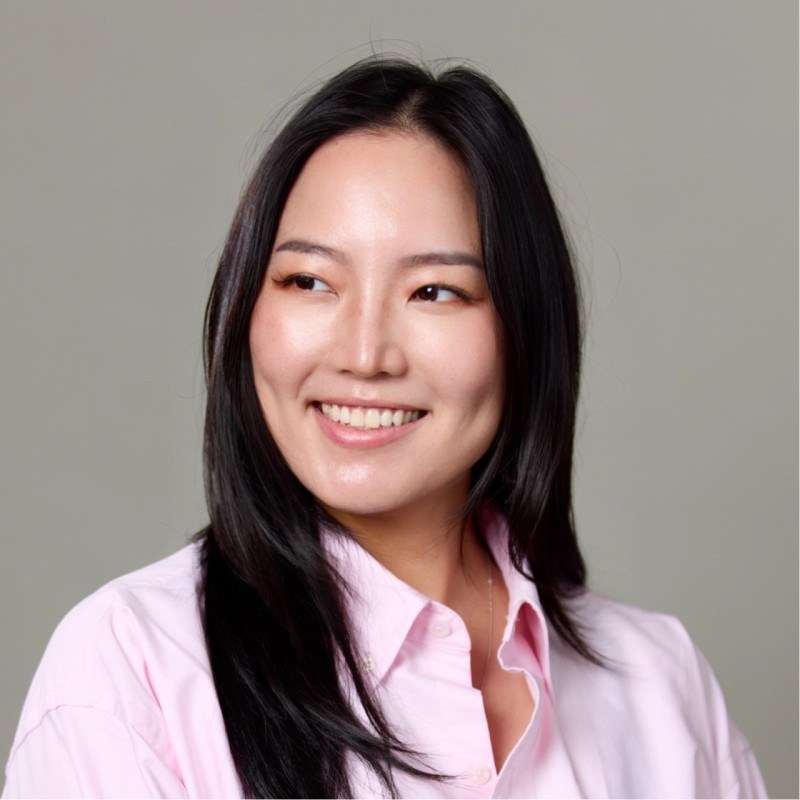
Lead UX Researcher, Designer, and Strategist based in Los Angeles. I blend data-driven insights with imagination to solve real-world problems and uncover new opportunities.

I'm a Lead UX Researcher, Designer, and Strategist with eight years of mixed-methods experience across B2C, B2B, hardware, software, and AR/VR. I have a graduate degree in Human-Centered Design & Engineering from the University of Michigan, a B.S. in Industrial Engineering from Clemson University, and a bias toward shipping.
My work sits where research, product strategy, and design overlap — turning evidence into decisions executives can defend and roadmaps engineers can build.
Outside work: Mandarin, Korean, English. Two dogs. One husband. Los Angeles.
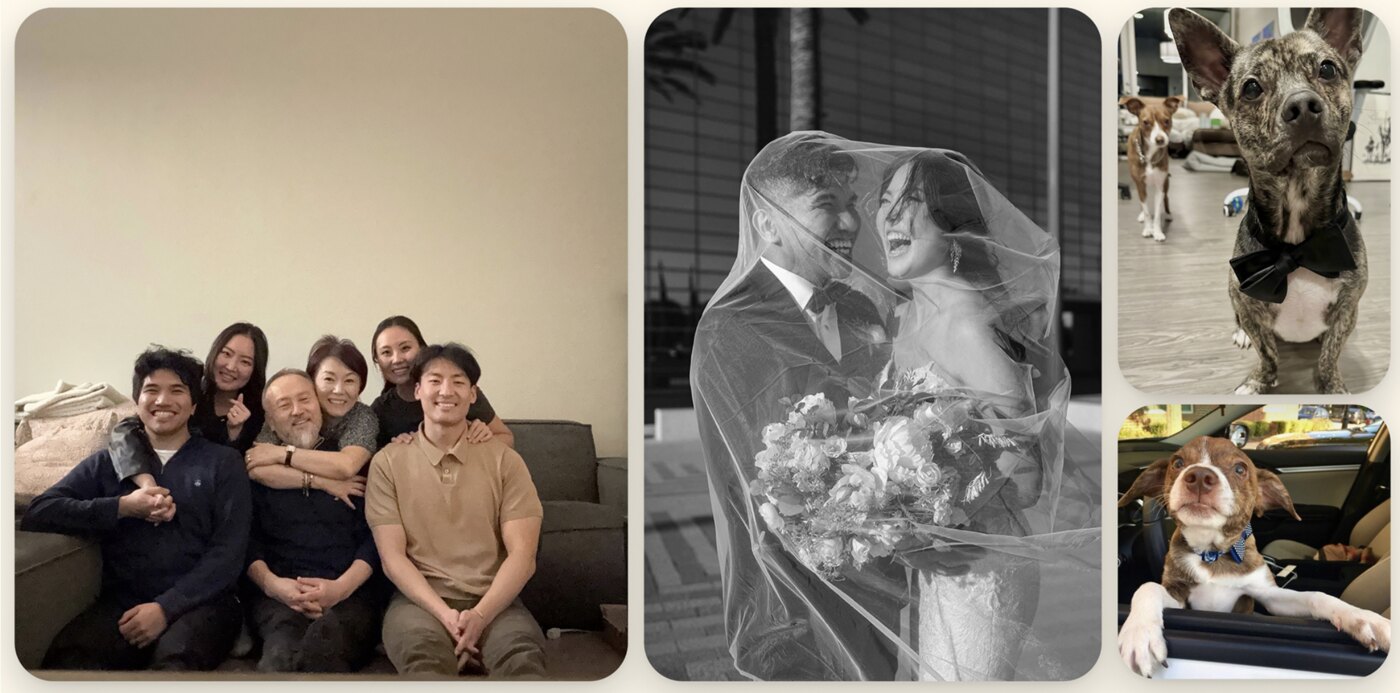
Family, a recent wedding, and two dogs — the people and moments that keep the work grounded.

I started in research because I wanted to know why. The why behind the numbers. The why behind the abandoned cart, the unread email, the feature that should have worked but didn't.
Eight years in, the work I keep returning to lives at the intersection of three things: rigorous mixed-methods research, product strategy that decision-makers can act on, and a willingness to do the unglamorous operational work — recruiting the right participants, coordinating with data science, packaging findings for executives who don't have time to read your full report.
I've led research that moved metrics (TurboTax Expert 365 Business — projected +18% conversion, −20% call duration), shaped multi-year strategy (Honda & Acura brand narratives for 2030–2040, anchored in 40+ SME interviews), and changed timelines (EDF Energy postponed a one-year migration with the evidence I gathered).
What ties it together is a belief that good research is useful research. It earns its place in the roadmap. It makes the next decision easier. It gives the team something to defend when the next stakeholder asks "why are we doing this?"
A sample of organizations I've led research for — across industries, business models, and product surfaces.
Most researchers specialize in one industry. I've deliberately gone broad — because the patterns that matter (decision-making, trust, friction, expectations) repeat across contexts, and you see them more clearly when you've worked in multiple.
Patient care-navigation research, EMR/EHR clinician-workflow contextual inquiry, trust and credibility signals, PHI-aware study design.
Conversion research, replatform UX, PRO/trade-customer segmentation, cart-and-checkout friction.
Subscription onboarding, trial-to-paid conversion, trust-building in human-AI hybrid services.
Future-state research, brand strategy, spatial computing, Gen Z values research.
Workflow research, internal-tool migration, data-platform adoption.
B2C flow research, retention drivers, friction-mapping at scale.
Spatial interfaces, BCI & EEG secondary research, future-state product visioning.
Master's degree in Human-Centered Design & Engineering (HCDE) — an interdisciplinary program covering qualitative research methods, statistical analysis, and design strategy.
The graduate program shaped how I think about research as a craft: not as a service function downstream of decisions, but as a structured discipline that produces the evidence those decisions are made from.
Bachelor of Science in Industrial Engineering — a systems-thinking foundation covering human factors, process optimization, and quantitative methods. Undergraduate training in engineering rigor and human-systems integration directly informs the analytical precision brought to UX research practice.
Short takes on research craft, AI in the design process, and what happens when evidence meets a roadmap. Same voice you would get in a working session — just shorter, and with fewer slides.